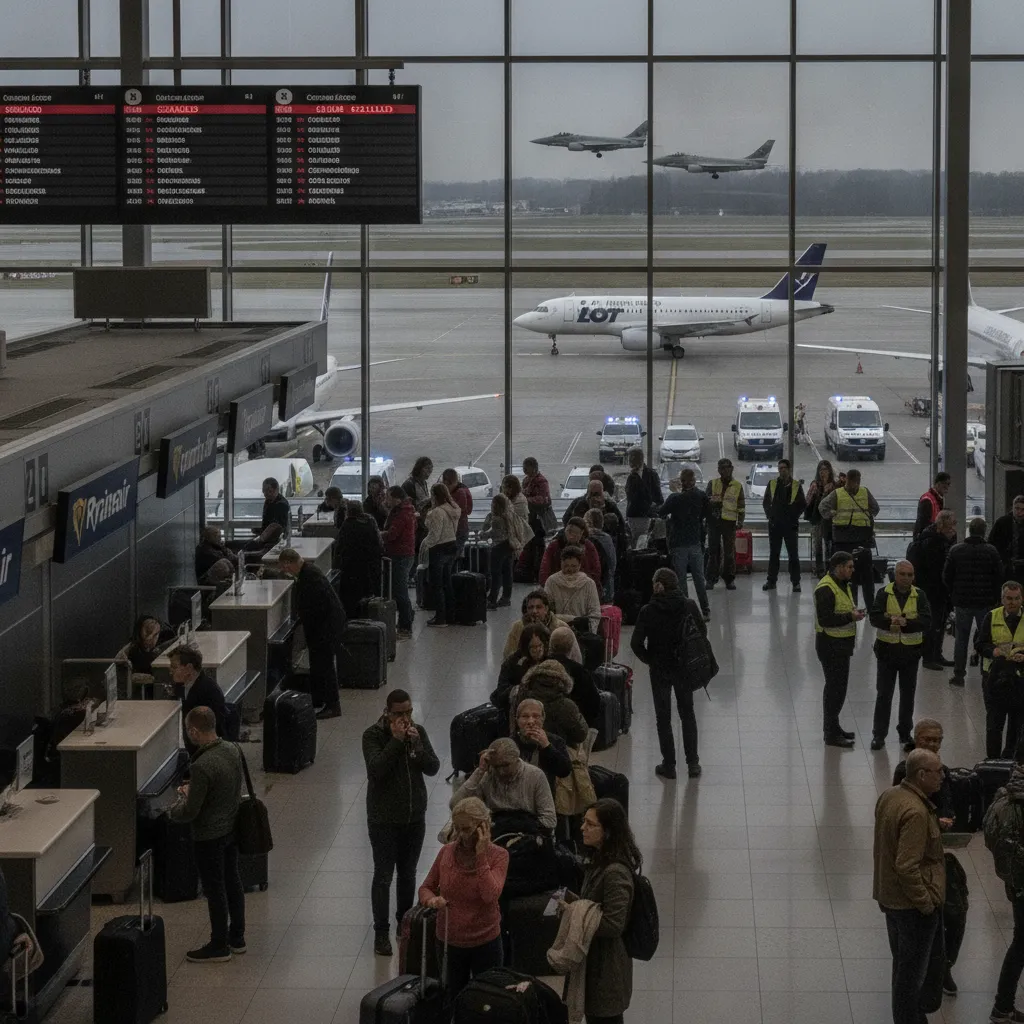
Travel across Europe descended into confusion on Tuesday as a series of coordinated bomb threats targeted several major airlines, forcing emergency landings and military interventions. While officials later confirmed that every threat was a hoax, the panic disrupted schedules for carriers including Ryanair, LOT, Wizz Air, and Scandinavian Airlines. In Italy, the situation escalated when the Air Force scrambled two Eurofighter jets to intercept and escort a flight from Dublin to Rome, while other flights arriving in Rome from Lisbon faced rigorous security sweeps by bomb disposal experts.
The disruption extended far beyond Italy, hitting airports in Poland and Spain with similar alarms. At Warsaw’s Chopin Airport and nearby Modlin Airport, flights from London and Copenhagen were diverted or subjected to runway closures as security teams searched cabins and luggage. Meanwhile, in southern Spain, over a hundred passengers on a flight from Manchester were forced off their plane in Murcia for comprehensive screening. These incidents followed a pattern seen just twenty four hours earlier when a Wizz Air flight was intercepted by a Hungarian fighter jet after receiving a threat mid air.
Experts suggest these events may be part of a broader strategy of hybrid warfare designed to create instability within the continent. Matthew Borie of Osprey Flight Solutions noted that such disruptions often align with heightened geopolitical tensions, suggesting possible links to state actors from Russia or Iran who utilize non traditional methods of harassment. He pointed out that these aviation scares mirror recent strange occurrences across Europe, ranging from drone incursions to sabotage targeting commercial infrastructure.
Despite the high level of tension and the sight of military aircraft accompanying civilian planes, aviation security specialists are urging travelers to remain calm. They emphasize that the rapid response from national authorities and NATO assets demonstrates that coordinated defense mechanisms are working effectively. Although no injuries were reported during the wave of alerts, investigators continue to probe whether these hoaxes were the work of a single organized group or separate copycat incidents triggered by regional volatility.