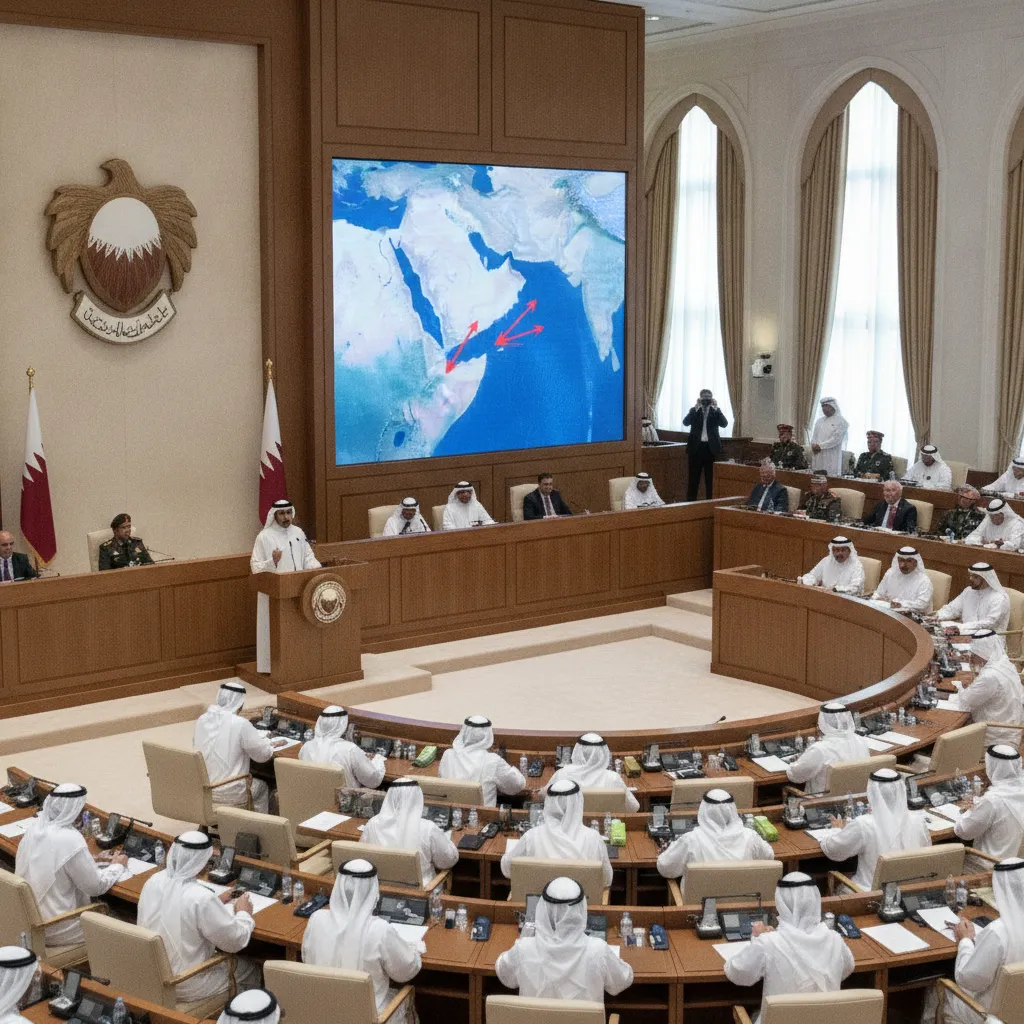
The geopolitical landscape of the Middle East has shifted into high gear following a wave of instability that has prompted Qatar to call for an immediate intensification of security measures. Speaking before the Shura Council, Emir Sheikh Tamim bin Hamad Al Thani warned that current safeguards are insufficient given the exceptional nature of recent regional events. He stressed that international efforts must be doubled to ensure safe navigation through the Gulf and the strategically vital Strait of Hormuz, while emphasizing the need to shield critical energy installations and civilian infrastructure from potential strikes.
This urgent plea comes amidst a chaotic backdrop of escalating violence involving Yemen’s Houthi rebels. The group has launched a series of aggressive attacks targeting key Saudi Arabian hubs, forcing authorities to halt flights at major gateways such as Riyadh’s King Khalid International Airport and Dammam’s King Fahd International. These disruptions have sent shockwaves through global travel and trade networks, highlighting the fragility of stability in one of the world’s most sensitive corridors.
Responding to the volatility, US President Donald Trump issued a sharp condemnation of the Houthis, accusing them of misbehaving very badly in light of their latest incursions. The American administration appears to be signaling a hardline stance as the region grapples with these sudden escalations. With air travel paralyzed in parts of Saudi Arabia and maritime threats looming over oil shipping lanes, diplomatic pressure is mounting for a coordinated response to prevent a broader conflict from taking hold across the peninsula.