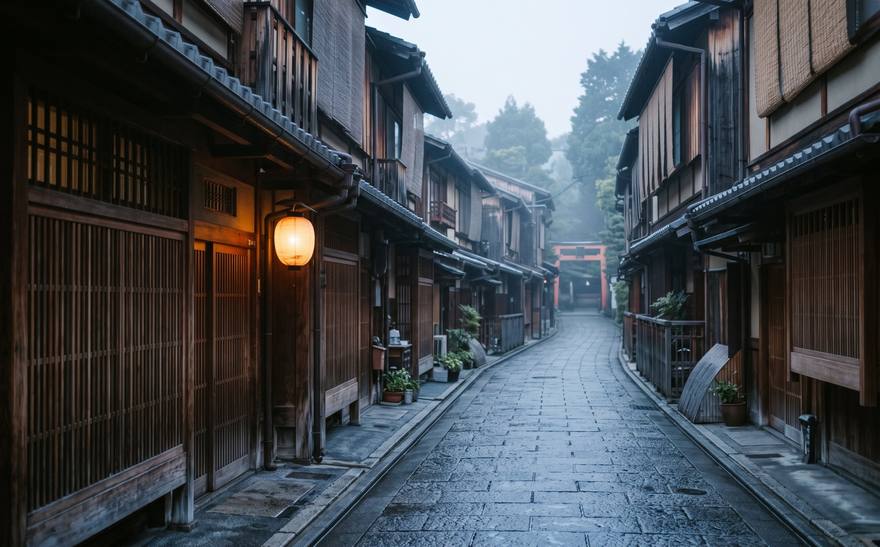
Kyoto’s problem is also its gift: almost everyone wants to see the same dozen places, at the same few hours, in the same narrow months. Beat that pattern and the city opens up. The whole strategy fits in one sentence — go to the famous things at dawn, and spend the crowded middle of the day where the buses don’t.
Morning: the famous ones, empty
Fushimi Inari, with its tunnels of vermilion gates, is overwhelming at eleven and sublime at six. The gates don’t open or close — the shrine is always accessible — so arrive at first light and you’ll have the mountain path almost to yourself, the only sound your own footsteps and the crows. Do the same with the bamboo grove at Arashiyama. By nine, both belong to the tour groups.
The difference between a photograph and a memory in Kyoto is about two hours of sleep.
Midday: go where the buses can’t
When the heat and the crowds peak, retreat north to the quieter temples around the Philosopher’s Path, or simply walk the Nishiki market and eat your way along it. The point is to be somewhere that was never going to be on the postcard, while everyone else queues for the one that was.
One rule for everything else
Don’t tip, do carry cash, and take your shoes off when the floor changes from stone to wood. Exceptional service here is simply the standard, not something you pay extra for — and trying to tip usually just causes a polite, confused standoff nobody enjoys.