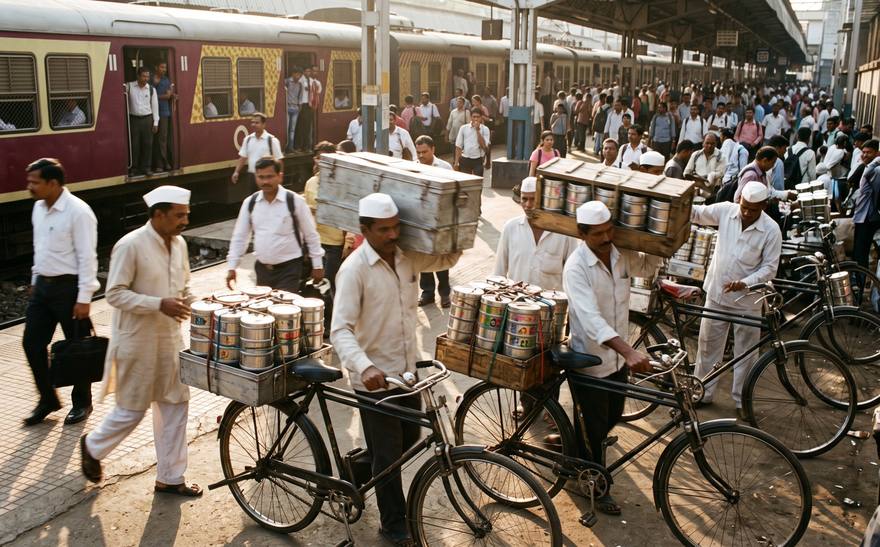
To understand Mumbai, watch its lunch. Every weekday an army of dabbawalas collects thousands of home-cooked meals in stacked tin boxes, threads them through trains, bicycles and foot traffic across a vast city, and delivers each to the correct office desk — then returns the empties the same afternoon.
They do it with a handwritten code of letters and colours, almost no technology, and an error rate so low that business schools fly in to study it. It is the whole city in miniature: relentless, improvised, and quietly, astonishingly efficient.
Mumbai runs on systems that look like chaos and turn out to be clockwork.
The same energy meets a traveler in the taxis and rickshaws. Agree the fare or insist on the meter before you set off, match the city’s briskness, and Mumbai opens up — street food and all — as one of the great, overwhelming, rewarding cities on earth.