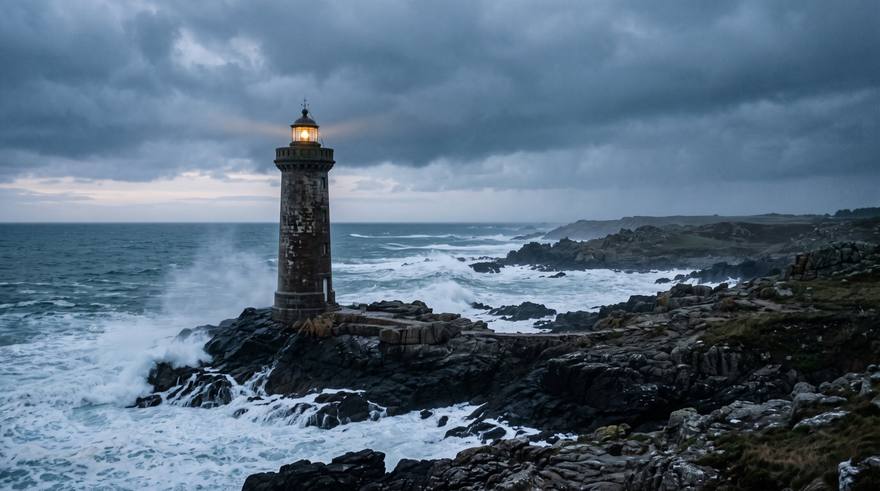
The lighthouse at the end of Yann’s road has not needed a keeper since 1994, when the last of the Breton lights was automated and the job he trained for quietly ceased to exist. The lamp turns itself on now, dusk after dusk, with no help from anyone. Yann still climbs up most evenings to watch it do so.
“Someone should see it work,” he says, as if this were obvious. He is seventy-one, built like a man who has spent his life leaning into wind, and he speaks about the sea the way other people speak about a difficult relative — with exhaustion, loyalty, and a complete inability to leave.
“The sea doesn’t need me to watch it. But I’d miss it if I didn’t.”
For a century his family kept lights along this coast, a chain of small granite towers passed from father to son along with a logbook and a particular way of reading weather off the colour of the water. The logbooks are in a museum in Brest now. Yann is the last of the line, and he knows it, and he has made a quiet peace with being a keeper of something that no longer needs keeping.
What the light was for
A lighthouse was never really about the building. It was about the promise it made to anyone out on the water in the dark: someone has thought about you, and left a light on. Automation kept the light. It couldn’t keep the promise — not in the way a man climbing a cold tower every night can. That, Yann will tell you, is the part worth saving.