The first thing you notice in an Icelandic shower is the smell — a faint trace of sulphur, like a struck match. It’s not a fault. It’s the whole system working exactly as intended: the water arriving at your tap has come, more or less directly, from inside a volcano.
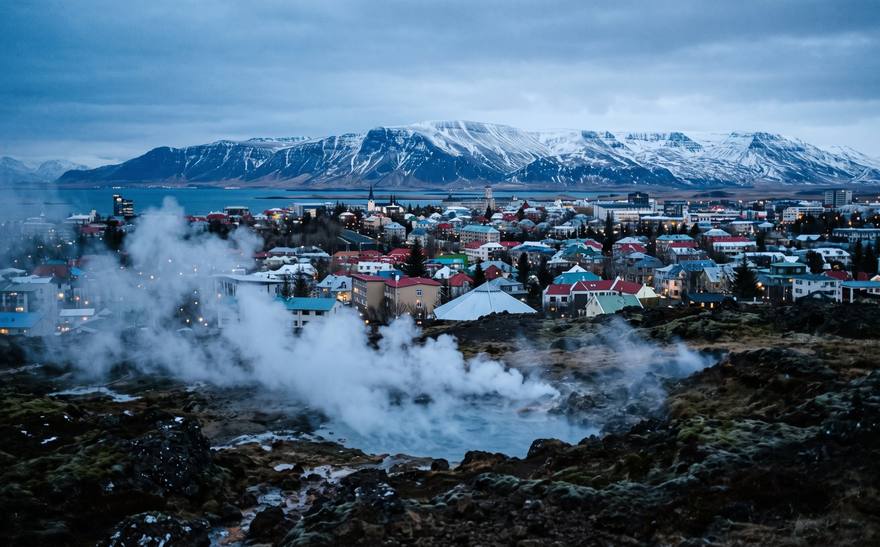
Around nine in ten Icelandic buildings are heated geothermally. Rainwater seeps into porous volcanic rock, meets the heat of the island’s restless geology, and comes back up as near-boiling water piped straight into radiators, swimming pools, and showers. The cold tap is glacial meltwater, among the cleanest on earth. Buying it in a bottle, locals will tell you with a raised eyebrow, is a tax you’ve chosen to pay.
The country didn’t become green because it was virtuous. It became green because it was cold, broke, and out of other options.
It wasn’t always this way. Within living memory Reykjavík ran on imported coal, and winters arrived on a cloud of smoke. The switch to geothermal was driven less by idealism than by arithmetic — importing fuel to a remote North Atlantic island is ruinously expensive. Necessity did the work that good intentions often can’t.
What it teaches the rest of us
The lesson isn’t that every country has a volcano. It’s that the cleanest systems tend to be built around what a place already has, rather than against it. Iceland leaned into its geology instead of fighting it, and ended up with heat so cheap that some pavements in Reykjavík are warmed from below to melt the winter ice.
For the visitor, the practical takeaway is smaller and more immediate: drink the tap water, skip the bottle, and don’t be alarmed by the match-strike smell. It means the island is doing what it does best — handing you the inside of a volcano, pleasantly warm, at the turn of a tap.